What is IFS Broker certification?
The IFS (International Featured Standard) Broker is an internationally recognized food safety standard designed to ensure the safety and quality of food throughout the supply chain. This certification is particularly important for companies acting as intermediaries between producers and distributors.
This certification offers two key advantages:
- It enables a company to adopt a quality and continuous improvement approach.
- It provides access to the most demanding markets—major manufacturers, supermarkets, and catering services—which increasingly require their suppliers to be IFS or, more generally, GFSI certified.
The 4 steps to IFS Broker certification
The process for obtaining IFS Broker certification involves 4 crucial steps.
- First, the company must conduct a thorough internal audit to assess its processes and identify any non-conformities with the requirements of the IFS Broker standard.
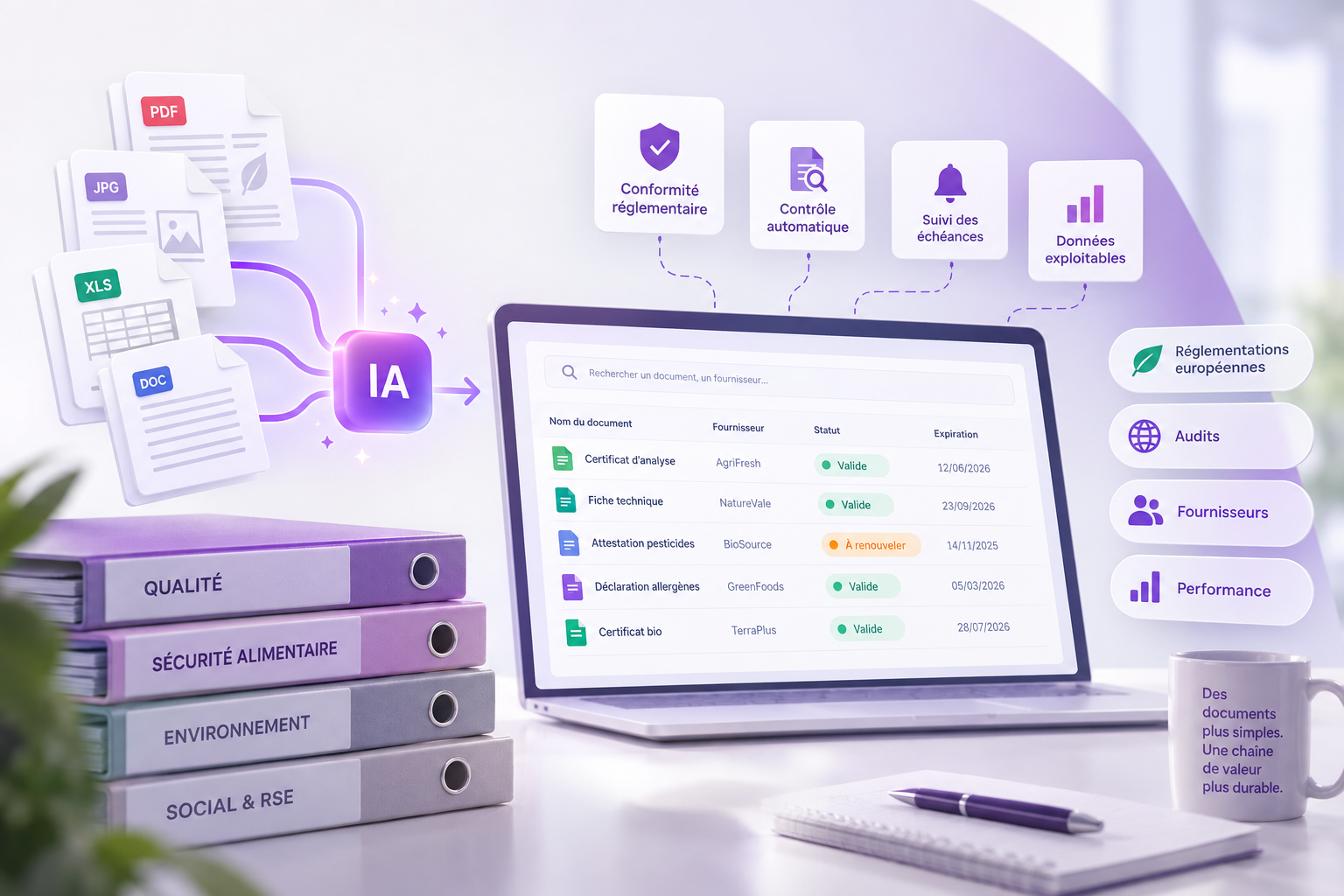
- Next, it must implement corrective measures to address these non-conformities and ensure that its practices comply with the standard's requirements. IFS Broker best practices include adopting digital solutions to ensure compliance and maximize the productivity of quality teams. Platforms like Tracklab (www.tracklab.co) make it possible to automatically monitor and maintain documentation for all suppliers, ensuring continuous compliance with the IFS standard.
- Once these preparations are complete, the company must engage an accredited certification body to conduct an external audit. This audit will cover all company activities related to food safety, from product receipt to shipment.
- If the company successfully passes this external audit and meets all the requirements of the standard, it will be awarded the IFS Broker certification.
How much does IFS Broker certification cost?
Obtaining and maintaining IFS Broker certification represents a significant financial investment for a company. The total cost of certification includes several components:
- Audit costs, which depend on the size and complexity of the business and the number of sites involved.
- Compliance costs, such as staff training, equipment purchases, and the establishment of document management systems.
- The annual certification fees, which cover follow-up audits and certificate maintenance.
According to our estimates, the total cost of obtaining IFS Broker certification for a company could be several tens of thousands of euros. In addition, recurring expenses should be planned to maintain certification over time.
Despite these financial investments, IFS Broker certification offers a company numerous advantages, including better management of food risks, improved reputation and credibility with customers and business partners, and easier access to international markets.
In conclusion, a company's decision to be IFS Broker certified is a testament to its commitment to excellence and food safety. This rigorous process, although expensive, constitutes a strategic investment in the sustainability and competitiveness of its activity on the global agri-food market.