GUIDE
Prepare your IFS Food audit: the Tracklab practical guide, 2026 edition.
Download the guide →Guide pratique IFS Food : préparez votre audit avec Tracklab
Indiquez vos coordonnées pour accéder immédiatement au téléchargement.
✓ C’est prêt
Le fichier s’ouvre dans Google Drive : vous pouvez le télécharger ou l’imprimer.

Product News
Mis à jour le
8/20/2025
16/9/26
The benefits of an integrated platform (QMS, LIMS, PIM, 3RPM) in quality management
Quality is now a strategic lever for gaining competitiveness, especially in regulated sectors. Integrated platforms (QMS, LIMS, PIM, 3RPM) offer a global and automated vision of quality management, improving traceability, compliance and responsiveness. They thus enable businesses to transform compliance into a genuine sustainable competitive advantage.


Quality is no longer a simple criterion of compliance: it is now a real strategic lever and a means of conquering new markets. In ever more regulated and competitive sectors such as the agri-food, pharmaceutical, cosmetic or industrial sectors, quality management requires efficient, connected and agile tools. It is in this context that the integrated platform is emerging, combining key systems such as QMS (Quality Management System), LIMS (Laboratory Information Management System), PIM (Product Information Management System) and 3RPM (Third-Party Risk & Performance Management). But what are the practical benefits of this unified approach?
What is an integrated platform?
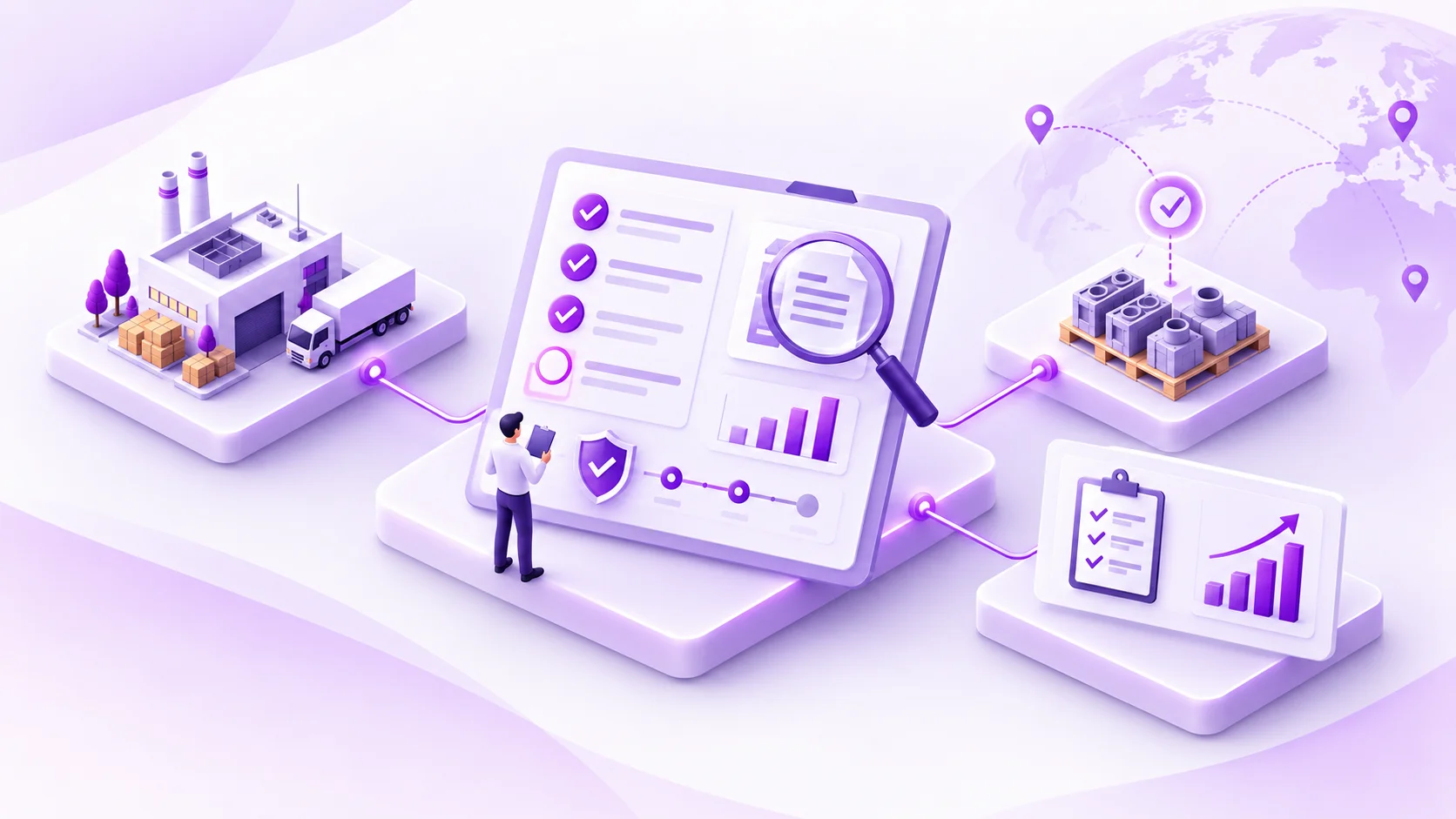
An integrated platform brings together several interconnected business software solutions, each playing a complementary role in quality management:
- QMS (Quality Management System): a system that centralizes audits, non-conformities, CAPA, procedures, and more.
- LIMS (Laboratory Information Management System): manages laboratory data and workflows, including analyses, samples, and results.
- PIM (Product Information Management): manages product information such as technical sheets, claims, composition, and labels.
- 3RPM (Third-Party Risk & Performance Management): manages suppliers and partners, including evaluations, certifications, and incidents.
Rather than using these tools in isolation, integration provides a global view of quality, from raw materials to finished products, including tests, processes, and partners.
Concrete benefits for quality management
- Better data traceability
An integrated platform offers complete, cross-functional traceability: a non-compliance detected in the lab (LIMS) can automatically trigger a corrective action (QMS), notify the relevant supplier (3RPM), and update product information (PIM). There is no need to juggle systems or manually reconcile data.
- Reduction of errors and duplicates
Integration eliminates manual data entry, a common source of errors. A single piece of data is entered once and then distributed to all relevant modules. This ensures the consistency and integrity of information throughout the entire chain.
- Increased responsiveness to incidents
When a quality incident occurs, the platform enables rapid decision-making thanks to immediate visibility into key data: suppliers involved, affected lots, tests performed, and repercussions on products. Response time is drastically reduced.
- Compliance made easy
Regulatory requirements are becoming increasingly stringent. An integrated platform simplifies the monitoring of standards (ISO 9001, IFS, BRC, GMP, etc.) and the preparation of audits through consolidated, real-time reports.
- Structured continuous improvement
By gaining a global perspective and automating workflows between teams, companies can better identify trends, recurring pain points, and areas for improvement. This fosters a quality culture that is proactive rather than reactive.
A sustainable competitive advantage
Investing in an integrated platform like Tracklab is much more than a simple technological decision; it is a strategic choice. By centralizing QMS, LIMS, PIM, and 3RPM tools, companies build a quality ecosystem that is more agile, reliable, and performance-driven.
It also sends a strong signal to partners, distributors, customers, and authorities: a firm commitment to safety, transparency, and product excellence.
Conclusion
In a constantly evolving environment where quality is becoming a key differentiator, an integrated platform is an essential technological foundation. It connects data, teams, and processes to transform compliance into a sustainable competitive advantage.
What if the true digital transformation of your quality management started here?
Charlotte Picard
Quality Engineer | Tracklab
Take control of your supplier data.
See how Tracklab centralizes, validates and keeps your supplier and product data up to date, so your teams can work faster with reliable information.
See Tracklab in action
Our latest news

Platform
Resources
You have subscribed to our newsletter thank you!
Oops! Something went wrong while submitting the form.